What does AI say when buyers ask if we're trustworthy?
We ask AI assistants the hard questions buyers ask in private: complaints, safety, who to avoid. You see each answer, how serious it is, and the pages the assistant used.
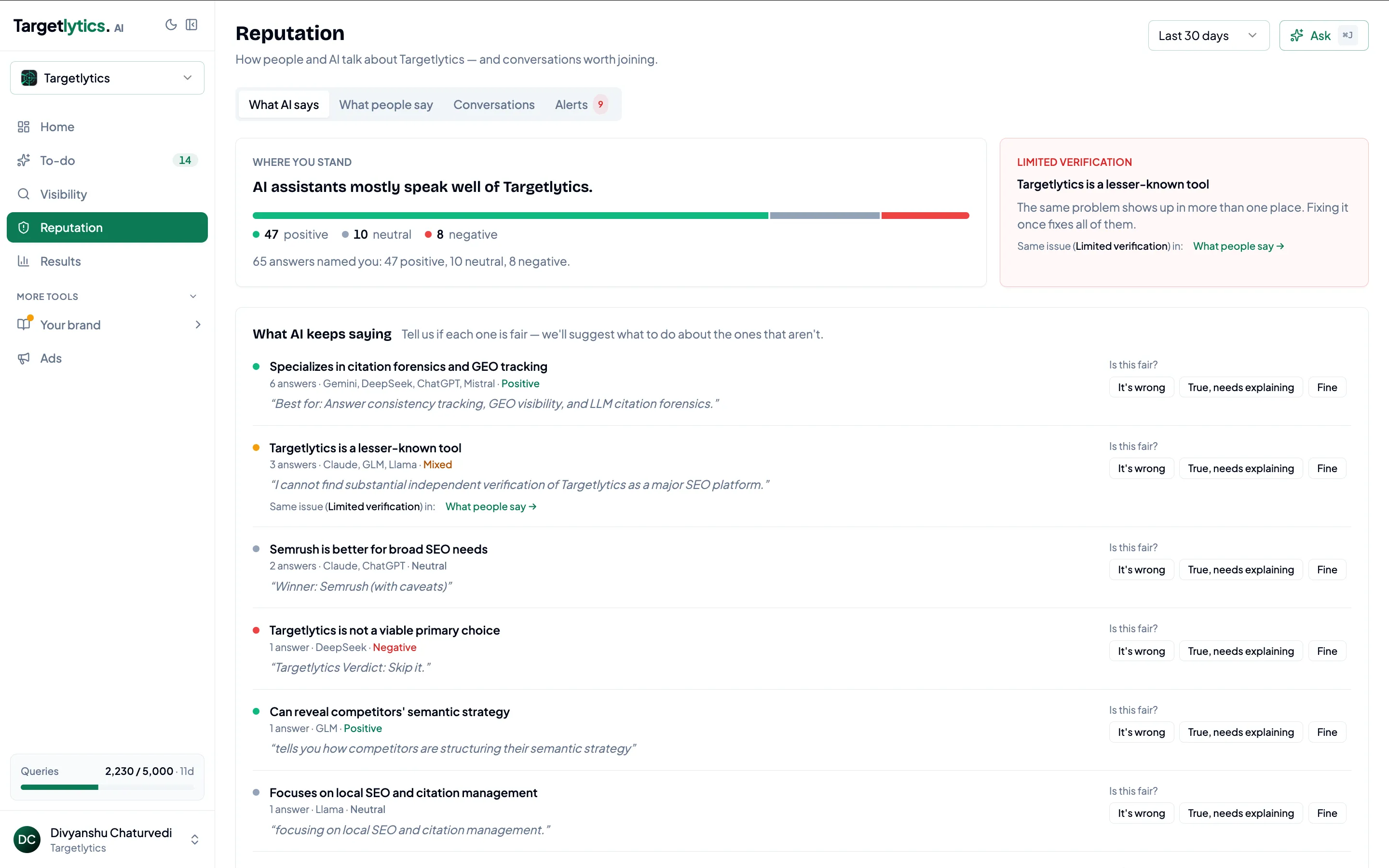
- 1Positive, neutral and negative answers about you
- 2What AI keeps saying, grouped by tone
- 3Which assistant said it, and the pages it used
What you do with it
- Find the review, thread or article behind a damaging answer
- Reply to that source, or publish a clearer answer for AI to use
- Run an extra check after bad news or a product incident
What it can't do
- It doesn't decide whether a claim is fair. It shows what was said; you judge it.
- A page an assistant used shows where it looked, not that the claim is true.
- It covers the hard questions we ask. Buyers may phrase theirs differently.
- A run can take a few minutes, because many questions go to many assistants.
The questions we ask AI about you
Before a call, buyers often ask an AI assistant about you. They add a word you'd rather they didn't. That answer is built from pages you may never have read.
We write hard questions for your category and the companies you compete with. They cover trust, complaints and comparisons. For example: "Is [brand] a scam?" or "Why do customers leave [brand]?" Or: "Has [brand] had any security incidents?"
What each finding shows
The question we asked and which AI assistant answered. The type of risk, a quote from the answer, and the pages it used. Each finding is marked critical or watch. AI assistants often disagree, so findings are shown per assistant.
A score from 0 to 100 sums it up, with counts of critical and watch findings. Use it to see whether things are getting better between runs. It's a tracking number, not a verdict on your company.
Checks run monthly, so you see a trend. You can also run one any time.
From a bad answer to a fix
A damaging answer usually leans on one thread, review or article. That page is something you can act on. Find it in what people say about you online. Reply there, or publish a better answer for AI.
The two views work together. People's posts shape what AI concludes. This page shows what AI has already concluded.
Frequently Asked Questions
Questions about what AI says about you
Those are the questions that decide deals, and buyers ask them where you can't see. Your normal tracking covers the questions you want to win. This covers the ones you can't afford to lose.
A 0 to 100 summary of how risky the answers were, with counts of critical and watch findings. Use it to see if things improve between runs.
Start with the pages the assistant used. Reply on the thread, ask for a correction, or publish a clearer answer AI can find.
Not always. We report what was said and which pages were used. Whether it's fair is your call, but you can't judge an answer you haven't seen.
Find out what AI says when you're not in the room
Start with a free audit of how AI assistants describe you today.
Free AI visibility audit
Find out what ChatGPT tells your buyers about you.
Where you're named, what AI gets wrong, and the first three things to fix. Emailed within two hours.
- Within 2 hours
- No credit card needed
- Free